
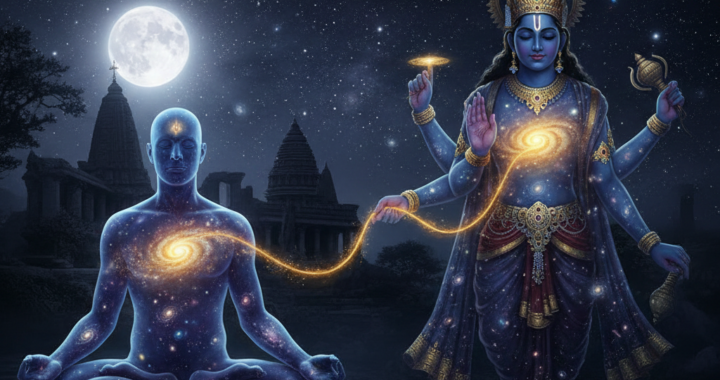
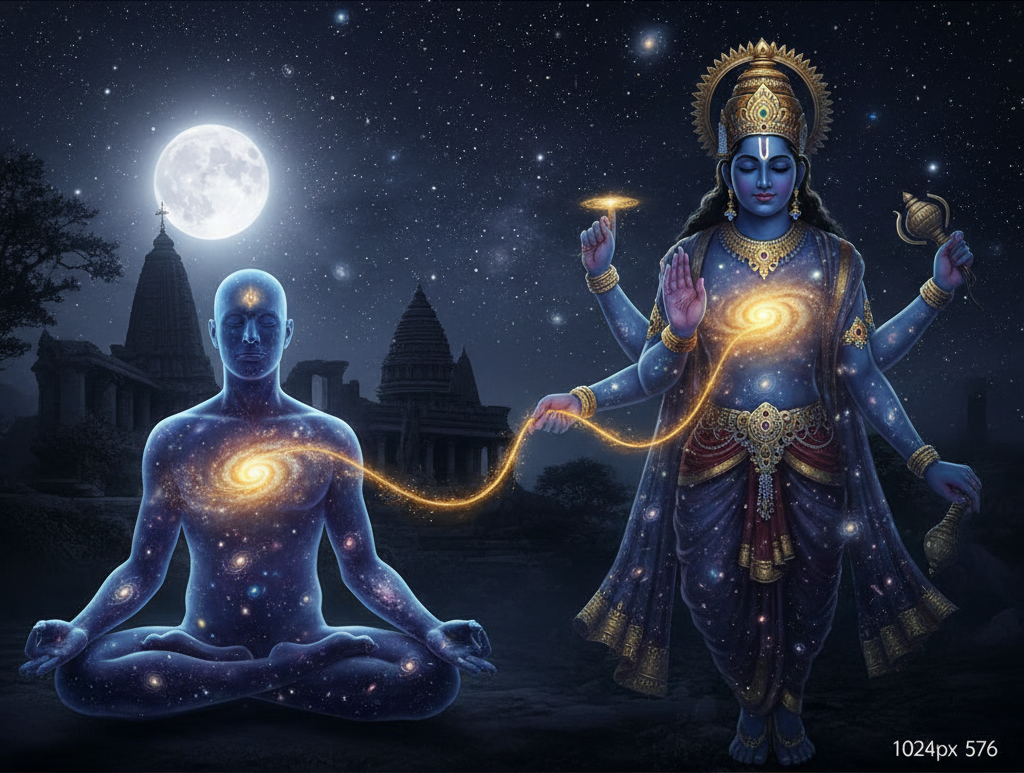
There has always been profound curiosity about nature of Atman and Paramatman. From time to time many have tried to solve this mystery some tried to understand it from the worldly matter some have look inside and ask who am I?
Western philosophy largely sought the answer by examine outside world and therefore has arrived at mostly worldly explanations. In contrast, Indian Philosophy consistently looked inside and they found very deep and profound answer. All the Indian philosophy have approached these questions from the different angle hence they have arrived at different answers. Let’s dive into the ocean of Indian Philosophy to decode the meaning of Atman and Paramatman.
The conscious being inside us exploring this world and feeling every moment, the Indian Philosophy named it Atman. This Atman is trapped inside the body/mind construct hence bound by the power of the body, but when this Atman break this limitation, it can have access to all knowledge and power, this is called Paramatma in Indian Philosophy.
In Simple words,
Atman = It is an individual self or soul. The consciousness with the limitation of body and mind.
Paramatman = The supreme soul Brahman, or God. The consciousness without any limitation in its purest form.
Now, Let’s explore this basic concept in all Indian philosophy.
1. Jain Philosophy
Atman
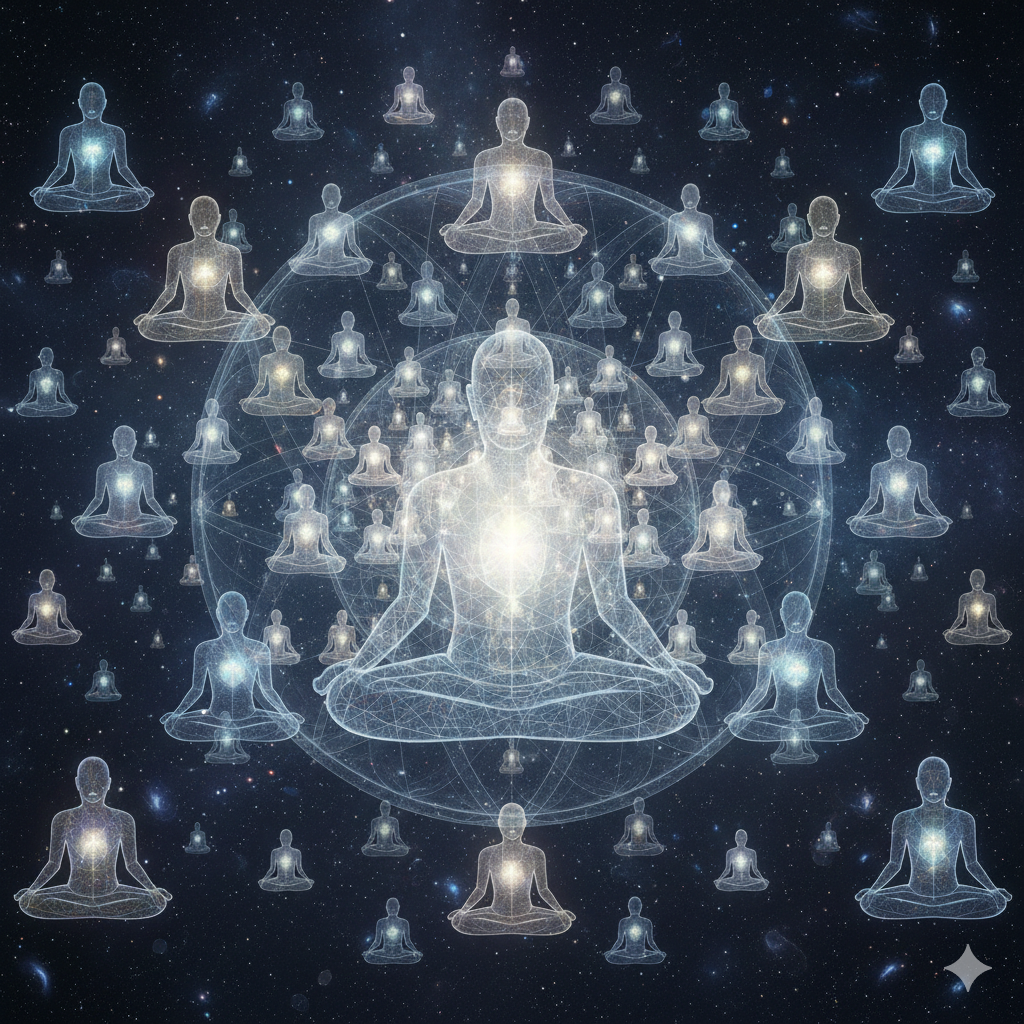
According to Jain philosophy Atma is eternal, individual and uncreated. There is an infinite number of Atmans in the universe, and every Atman expands or contracts to fit the body it inhabits. Atmans are in continuous cycle of birth and death until they achieve liberation.
Jain philosophy tells that Atman exist everywhere including in “one-sensed” being like earth, water, fire, air and plant bodies, they may contain countless individual souls in one body.
Souls are of two types
- Liberated (siddhas)
- Bound by Karma – still in cycle of birth and death
Then these souls further divided in
- Bhavya(capable) – potential to achieve liberation
- Abhavya(incapable) – eternally incapable of attaining liberation
Paramatman
Unlike the other philosophies no separate concept for Paramatman. The Siddhas who have already achieved the liberation are considered as the Paramatman. Such a perfected souls reside in Siddhashila (the abode of the liberated souls).
Buddhism
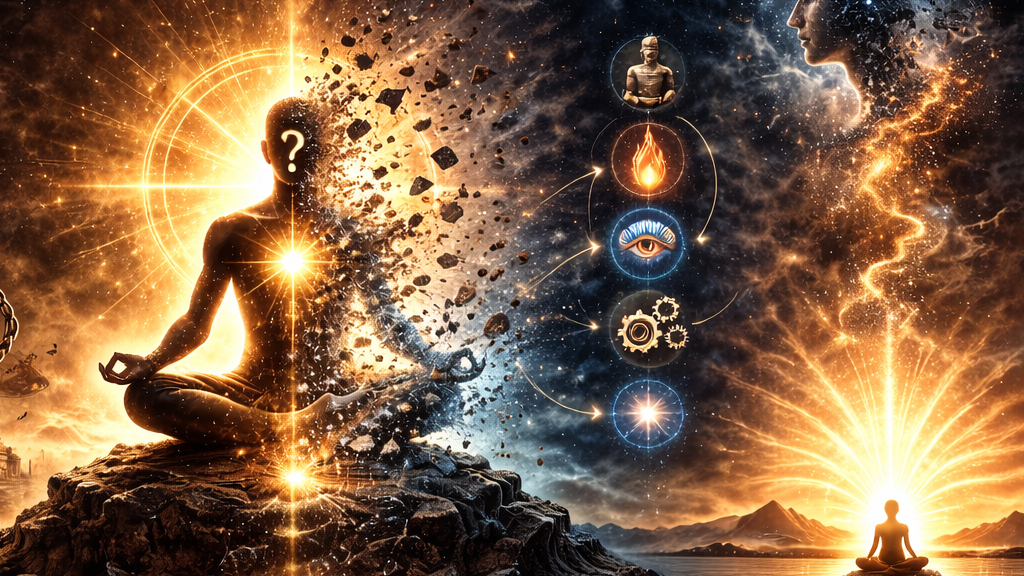
In Indian philosophy Buddhism has very unique way to define existence. They don’t believe in any permanent, unchanging Atman. According to them, everything is inherently impermanent. Everything arises from conditions, highlighting interconnectedness rather than inherent existence. This concept is called Anatman (non-self). What we call “I” is not a fixed entity—it’s a process.
The Buddha (Gautama Buddha) did not deny experience, personality, or consciousness. He denied the idea of an eternal, independent essence behind them.
No belief in the permanent Atman so there isn’t concept of Paramatman.
Nyaya and Vaisheshika Philosophy
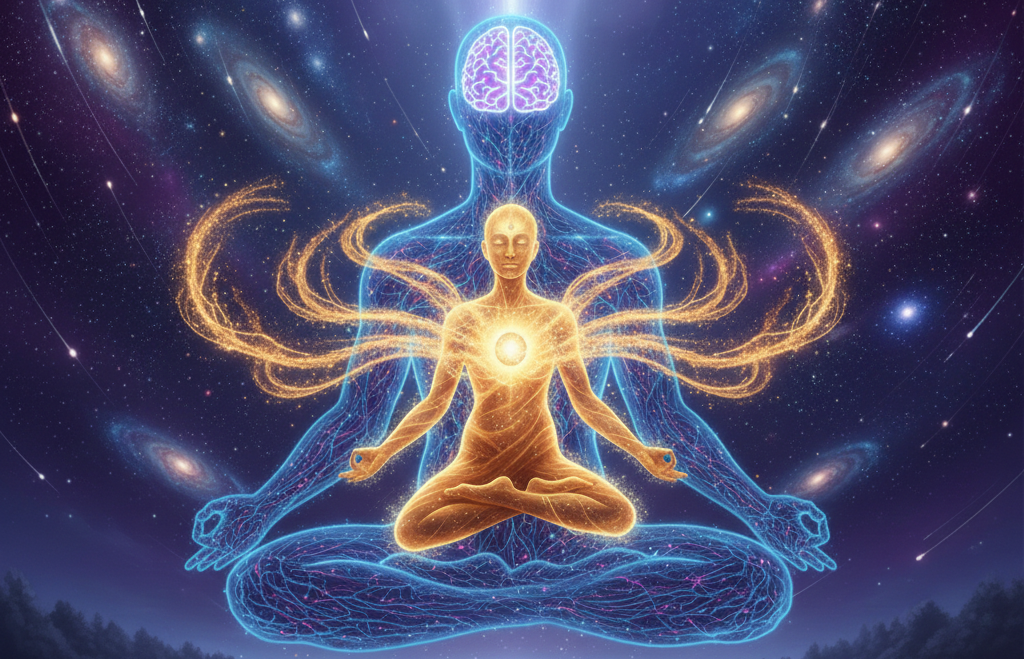
Nyaya and Vaisheshika are considered as the sister philosophies as they share a common goal of liberation through right knowledge and a realistic, pluralistic worldview.
Atman
Nyaya and Vaisheshika define Atman as the eternal, all-pervading and distinct from body, senses and mind. The self is like a “container” in which qualities like desire, aversion, effort, pleasure, pain and knowledge reside. They believe that consciousness is not essence of Atman. Instead, it arises only when the atman connects with mind and the mind connects with the senses and objects.
There is infinite atman as every person have the different filling and the knowledge at the same time. Atman is all pervading and can experience the world only through mind.
Paramatman
Paramatman is the supreme, singular and omniscient soul, often referred to as Ishwara (God) , who creates, maintains and destroys the world. In Nyaya and Vaisheshika Paramatman or God is the efficient cause (Nimita Karana) who organize the world according to the collective karma of the individual souls. Paramatman does not create the world out of nothing; He fashions it out of existing atoms according to the Adrishta (the “unseen” merit and demerit) of the individual Atman. Unlike the individual Atman, Paramatman possesses infinite knowledge, power, and bliss. His knowledge is eternal and does not require the “mind-sense” connection that humans need.
Samkhya and Yoga Philosophy
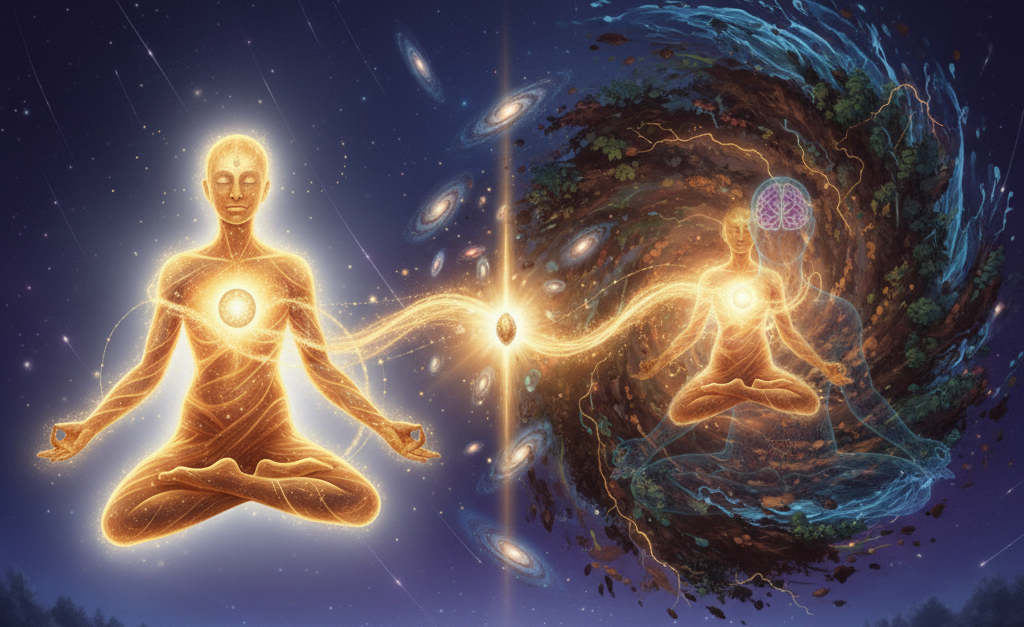
Samkhya and Yoga are also considered as the sister philosophy as they both believe in dualistic worldview, Purusha (pure consciousness) and Prakriti (matter). Samkhya provides the theoretical, metaphysical framework and yoga provides the practical methodology to achieve liberation.
Atman
Both philosophies use term “Purusha” to denote Atman. Purusha is pure consciousness itself, not a substance that possesses consciousness. These purushas are infinite, each is a unit of consciousness. It is a “silent witness” (Sakshi). It does nothing; it simply illuminates the activities of the mind and body.
Paramatman
Classical Samkhya is non-theistic. It rejects the idea of God. It says universe evolves from Prakriti automatically when in proximity to Purusha. Yoga introduces Ishvara as a “Special Purusha” (Purusha-vishesha).
Unlike the individual Atman, Ishvara was never bound by karma, afflictions (kleshas), or the fruits of actions.
Mimamsa Philosophy
Mimamsa is the branch of Indian philosophy which is mainly focused on Dharma (duty) and the performance of Vedic rituals.
Atman
Mīmāṃsakas (specifically Kumarila Bhatta and Prabhakara) believe in the existence of many individual souls (jīva), which are eternal, omnipresent, and distinct for everybody.
Prabhakara school align with Nyaya and believes that the Atman is Unconscious by nature and consciousness arise when the soul interacts with the mind and objects. Whereas Bhatta school believes that consciousness is the potency (Shakti) of Atman not consciousness itself.
Paramatman
Interestingly, classical Purva Mimamsa is atheistic or see the God in different way.
Mimamsa holds the belief that Universe is eternal, it was never created and nor destroyed so there is no need for Paramatman to build the world. Mimamsa believes in the Apurva, which means the unseen force generated by a ritual. The world works on the law of karma with no need for any superior being for managing it. For them the Gods are the placeholders or sound necessary for the ritual to work.
Vedanta Philosophy
In the Vedanta, the relationship between the Atman and Paramatma is in the center and definition of this relationship varies across the three branch of Vedanta.
Advaita Vedanta
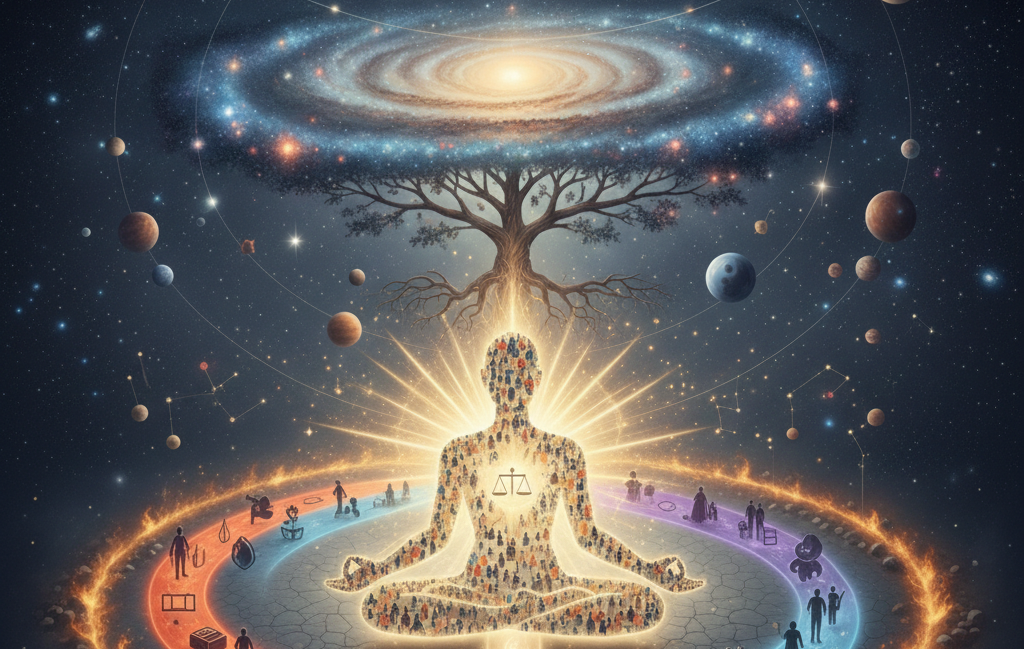
According to Adi Shankaracharya (who put the foundation for Advaita), Atman and Paramatman are one and same. It is not like soul is part of God, but it is God. We don’t realize due to the ignorance or avidya caused by Maya. Famous metaphors given to prove this logic is pot and space. Just as the space inside the pot is same as the infinite space outside, Atman is identical with Paramatman once the pot (body/ego) broken.
Vishishtadvaita Vedanta (Qualified Non-Dualism)
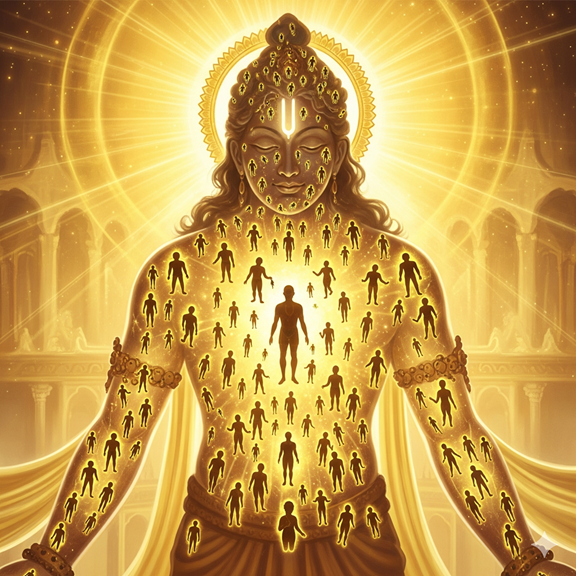
According to Ramanuja (founder of Vishishtadvaita ) Atman and Paramatman are inseparable but distinct. Paramatman is the Whole, and the individual Atman are the parts. Famous metaphor to understand is tree and leaves. Think of the relationship between a body and its soul, or a tree and its leaves. The leaves are part of the tree and cannot exist without it, but a leaf is not the whole tree. The Atman is real and eternal, but it is always dependent on Paramatman (Vishnu).
Dvaita Vedanta (Dualism)
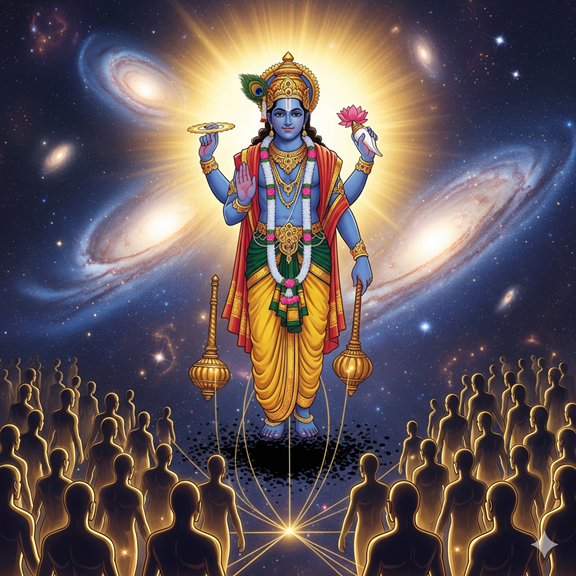
Madhvacharya (Founder of Dvaita) makes the clear gap between Atman and Paramatman. Atman and Paramatman are two entirely different realities. Paramatman (Vishnu) is independent (Svatantra), while the Atman is forever dependent (Paratantra). Famous metaphor for understanding the master and servant. The relationship is like that of a Master and a Servant. The servant can become very close to the master and reflect his qualities, but the servant never becomes the master. There are infinite individual Atman, and each remains a distinct individual even after liberation.
In the End…
Indian philosophy has many different ways to understand the reality. Where ever your heart lies choose that one. In the end, there is a journey that way have to take, for what we have taken this and many births before and that journey is of Atman to Paramatman.

Hina is the founder of BrowsingIndia, a platform dedicated to making Indian philosophy, epics, and consciousness-related ideas accessible to curious readers. A computer engineer by profession, her lifelong passion for Indian scriptures led her to pursue a Master’s in Hindu Studies, and she is currently a PhD research student in the same field. Her writing is grounded in close reading of primary texts and respected scholarly sources.