
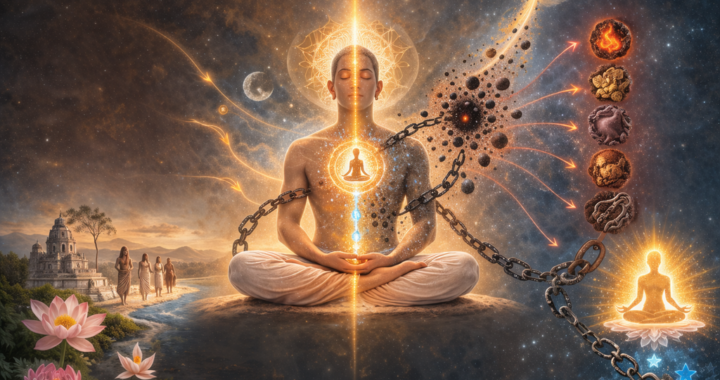
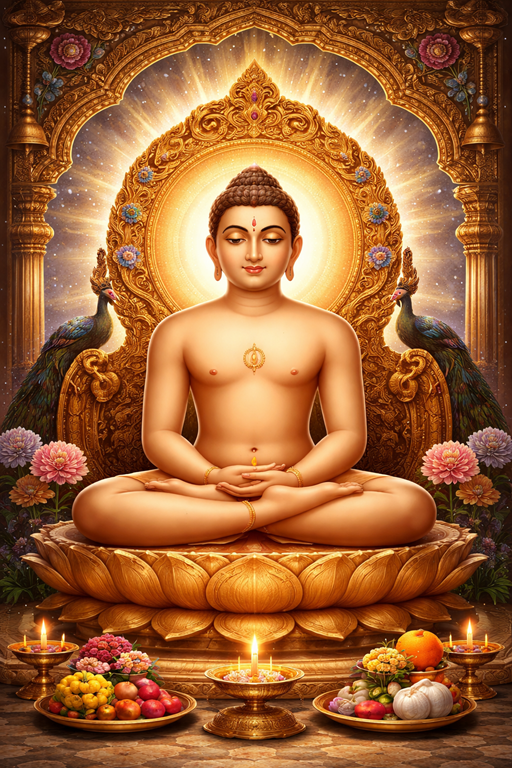
If there is one religion in the world that has thought about consciousness with the most precision and seriousness — it is Jainism.
While other traditions discuss consciousness in spiritual or poetic terms, Jainism built an entire scientific and philosophical system around it — thousands of years ago.
The Core Jain Idea — Every Soul Is Pure Consciousness
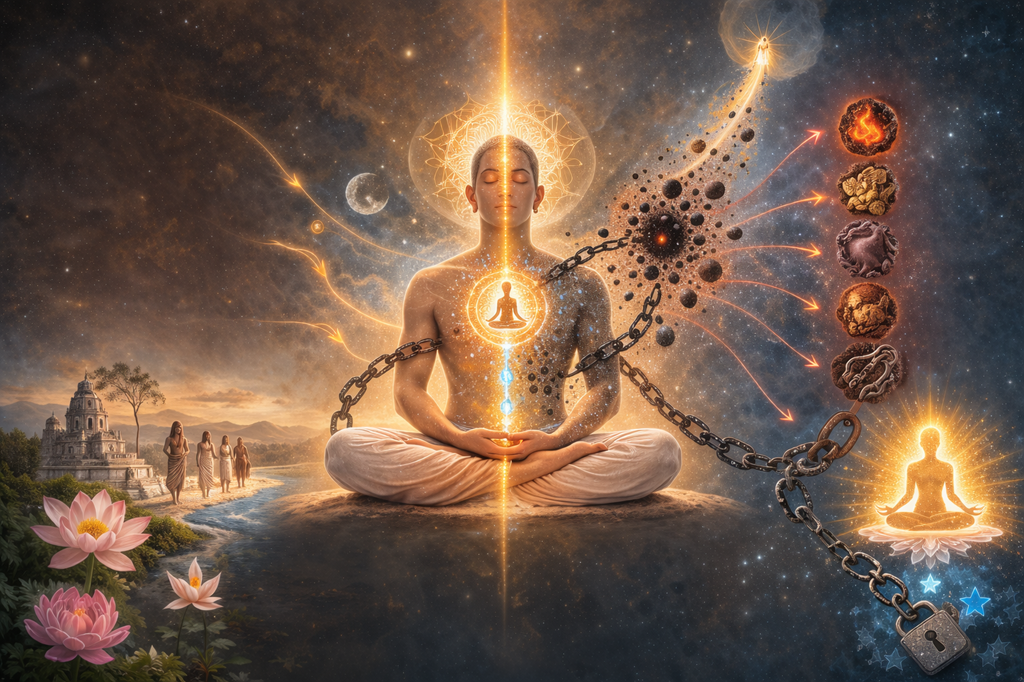
In Jainism, the universe is filled with souls — called Jiva.
And every single Jiva — whether it is a human being, an animal, a tiny insect, or even a plant — has consciousness.
This is the foundational Jain belief:
Consciousness is not a human privilege. It is the very nature of every living soul.
But here is the key question Jainism asks:
If every soul is pure consciousness — why do most of us feel confused, unhappy, and incomplete?
The answer Jainism gives is both simple and profound.
Karma — The Dust Covering Your Consciousness
In Jainism, karma is not just about actions — it is something far more literal and physical.
Jainism describes karma as actual fine particles — invisible matter — that stick to your soul because of your passions, desires, anger, and ego.
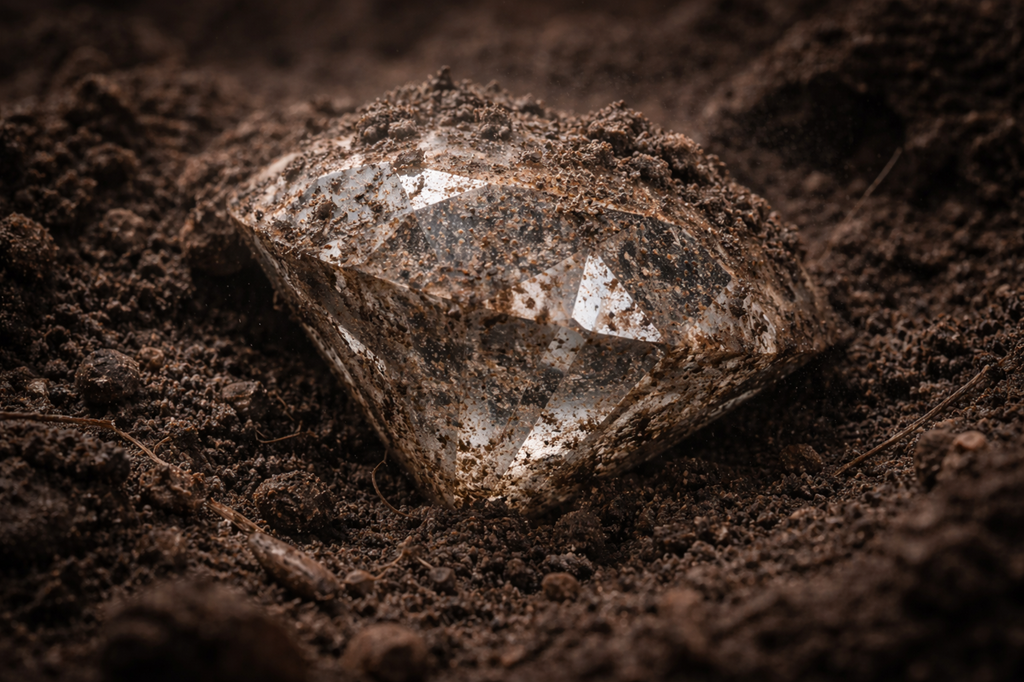
Imagine your soul — your pure consciousness — as a crystal clear diamond.
Now imagine layers and layers of dust, mud, and dirt slowly coating that diamond over many lifetimes.
The diamond is still there — still perfect, still pure. But you cannot see its brilliance because of all the coating.
In Jainism:
The diamond = your soul (Jiva) — pure consciousness and awareness in their most perfect form
The dust and mud = karma particles — accumulated through desire, anger, ego, and attachment
Liberation (Moksha) = completely cleaning the diamond until it shines in its original, full glory
This is the Jain understanding of consciousness vs awareness — your true nature is already perfect consciousness and perfect awareness. You just cannot see it clearly right now because of karmic covering.
Two Beautiful Jain Terms
| Sanskrit/Prakrit Term | Simple Meaning |
|---|---|
| Jiva | The living soul — pure consciousness at its core |
| Ajiva | Non-living matter — everything that is not consciousness |
| Kevala Jnana | Infinite, perfect knowledge and awareness — the fully liberated state |
| Gunasthana | 14 stages of spiritual development — from deep unconsciousness to full awakening |
Consciousness in Jainism — The 14 Stages
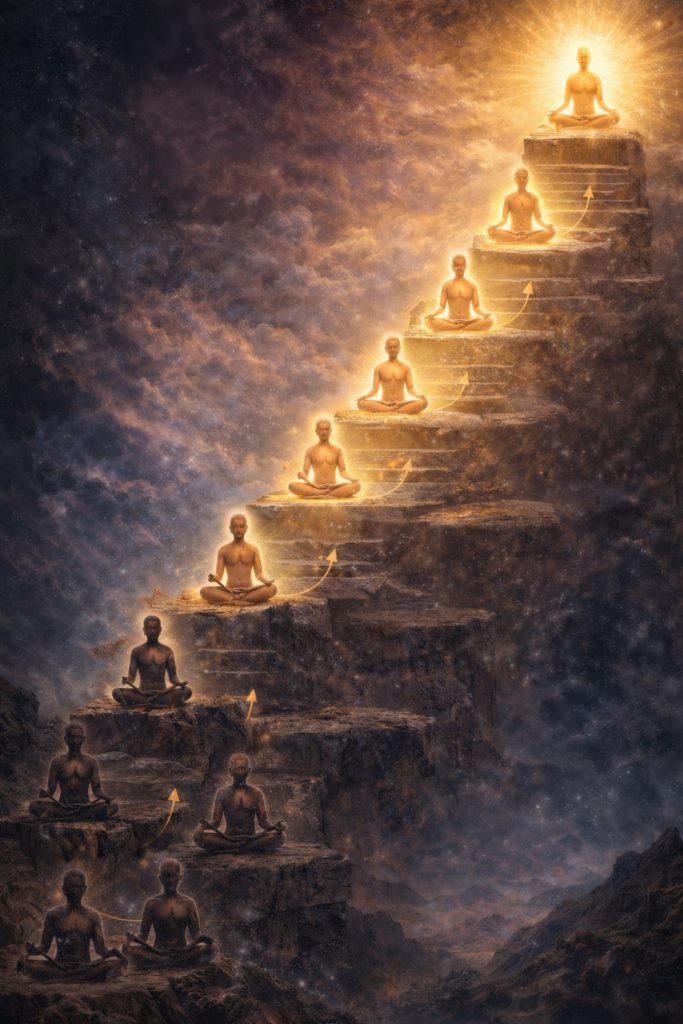
This is where Jainism becomes truly extraordinary.
Most traditions say — you are either asleep (unconscious) or awake (conscious). Jainism says — it is far more gradual and detailed than that.
Jainism maps out 14 stages of spiritual consciousness — called Gunasthanas — that a soul passes through on its journey from complete ignorance to full liberation.
Think of it like a staircase — from the basement of unconscious, karma-driven living — all the way to the rooftop of infinite, perfect awareness.
Here are the key stages in simple terms:
Stage 1 — Mithyadrishti
Complete wrong understanding. The soul is almost entirely covered by karma. Consciousness is present but completely clouded. The person lives purely on instinct, desire, and ego — with no real self-awareness at all.
Stage 4 — Avirata Samyagdrishti
A massive turning point. The soul has a glimpse of its true nature. Right understanding dawns. This is like the moment in our wall-staring example when you suddenly “come back” — but on a spiritual scale. Awareness flickers on.
Stages 5 to 7
The soul begins actively working to reduce karma. Awareness deepens. Discipline, meditation, and right conduct begin. Consciousness starts to clear like a cloudy sky beginning to open.
Stages 11 to 13
Almost all karma is destroyed. The soul rests in extraordinarily deep awareness — close to pure consciousness. Very few people in history have reached here.
Stage 14 — Ayogi Kevali
Complete liberation. All karma is gone. The soul now exists in Kevala Jnana — infinite, perfect, all-knowing consciousness and awareness — fully united, fully clear, fully free.
This 14-stage map of consciousness is one of the most detailed and sophisticated psychological and spiritual frameworks ever created by any civilization.
The Jain Vision of a Liberated Soul
When a soul reaches full liberation in Jainism — it is called a Siddha.
A Siddha is described as having:
Infinite consciousness — Ananta Chaitanya
Infinite awareness and knowledge — Ananta Jnana
Infinite bliss — Ananta Sukha
Infinite energy — Ananta Virya
Notice something beautiful here — in the fully liberated state, consciousness and awareness are no longer two separate things. They become completely one — infinite, undivided, and perfect.
This is the Jain answer to consciousness vs awareness — in liberation, the question dissolves. There is only one infinite light — knowing itself completely.
The Tirthankara — A Living Example of Pure Consciousness
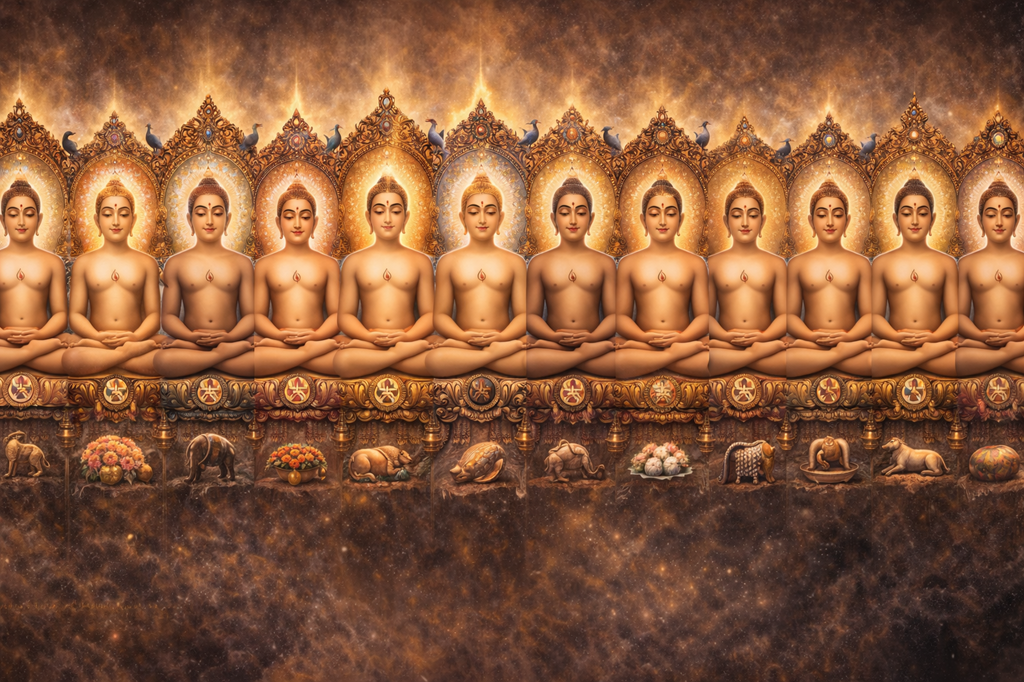
Jainism gives us 24 great liberated teachers called Tirthankaras — the most recent being Lord Mahavira.
Mahavira is described as someone who achieved Kevala Jnana — infinite awareness — at the moment of his enlightenment under a Sal tree.
In that moment:
All karmic covering dissolved
Pure consciousness shone through completely
He became simultaneously aware of all things — past, present, and future
The separation between consciousness and awareness disappeared entirely
For Jains, Mahavira is not a god to pray to — he is a demonstration of what pure consciousness looks like when it is completely free. A living proof that the diamond inside every soul is real.
The Most Practical Jain Teaching
Jainism gives three practical tools — called the Three Jewels (Triratna) — for moving from clouded consciousness to pure awareness:
1. Right Faith (Samyak Darshana)
Believing in the true nature of the soul — that you are pure consciousness at your core, not your karma, not your ego, not your story.
2. Right Knowledge (Samyak Jnana)
Understanding clearly the difference between the soul (Jiva) and matter (Ajiva) — knowing what you truly are versus what is just covering you.
3. Right Conduct (Samyak Charitra)
Living in a way that stops adding new karma and slowly dissolves old karma — through non-violence, honesty, non-attachment, and disciplined awareness.
In simple terms — right faith clears your vision, right knowledge gives you the map, and right conduct is the actual cleaning of the diamond.
The Question Jainism Leaves You With

Here is the thing about the Jain view of consciousness that stays with you long after you have understood the philosophy.
It does not ask you to become something new.
It does not ask you to earn consciousness, develop awareness, or build something from scratch.
It simply says — the diamond is already there. It has always been there. It was never destroyed. Not by your mistakes, not by your past, not by your worst moments. The dust is not you. The diamond is you.
Every moment of confusion, every burst of anger, every fear, every act of ego — Jainism sees these not as your true nature but as dust. Temporary. Removable. Not the final word on who you are.
And every moment of genuine kindness, of clear seeing, of quiet inner stillness — Jainism says that is the diamond showing through. That is your actual consciousness, briefly visible between the clouds.
The 14 stages are not a judgement. They are a map that says — wherever you are right now, there is a next step. And the next step after that. And the direction is always the same — toward more clarity, more awareness, more of what you already are underneath everything that has covered you.
Mahavira did not become something extraordinary. He revealed something ordinary — the pure consciousness that every single soul, including yours, is made of.
In the End…
So here is the question Jainism asks you — not as a philosopher, not as a monk, but as someone simply living their life:
If the diamond inside you has never been damaged — only covered — what one layer of dust are you ready to start cleaning today?