
Liberation is known as the freedom, Moksha and with many names in different philosophies. But the goal is one freedom from what we are now, freedom from pain, sufferings. This is the goal that we all are working for knowingly or unknowingly. What we do everyday the goal is happiness and what we do in our whole life, the goal is the same happiness.
If you are a businessman earning money is happiness, sportsperson then winning is happiness and spiritual seeker than breaking from the cycle of birth and death is happiness. In this all sense it is the end of our search. This is where our all goals meet and we find what we are seeking for through day, through lifetime or through many births. Liberation is the end goal.
Now the question arises what after we achieve this freedom, this liberation, what is that we are after we break free from cycle of birth and death? Do we again start after getting there? Is this a eternal state or the monetary feeling? Let’s find out from the lance of Indian Philosophy.
All Indian Philosophies agreed that Liberation means the end of
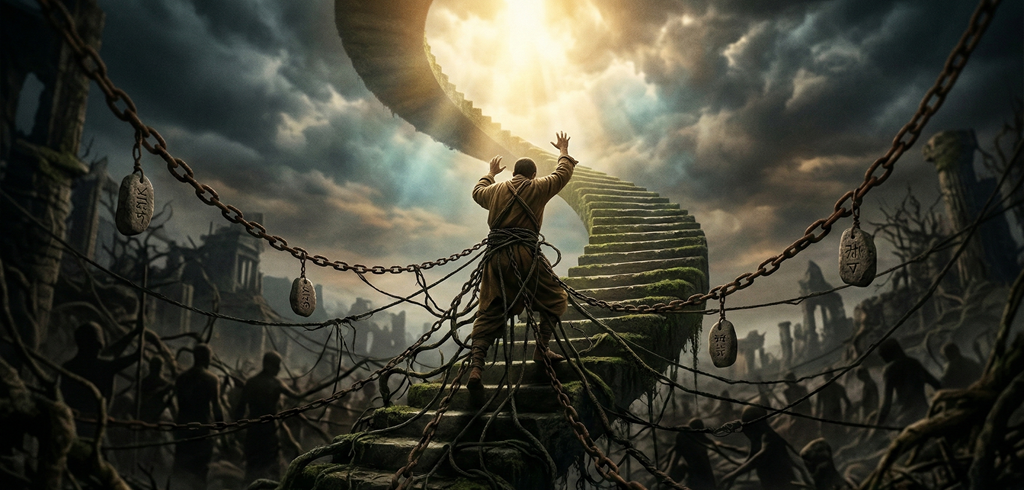
- Cycle of birth and death (samsara)
- Karmic bondage
- All forms of suffering, ignorance, attachment and passions
- Limitation of the physical body and material limitation
Now how it is a new start let’s see
Jain Philosophy
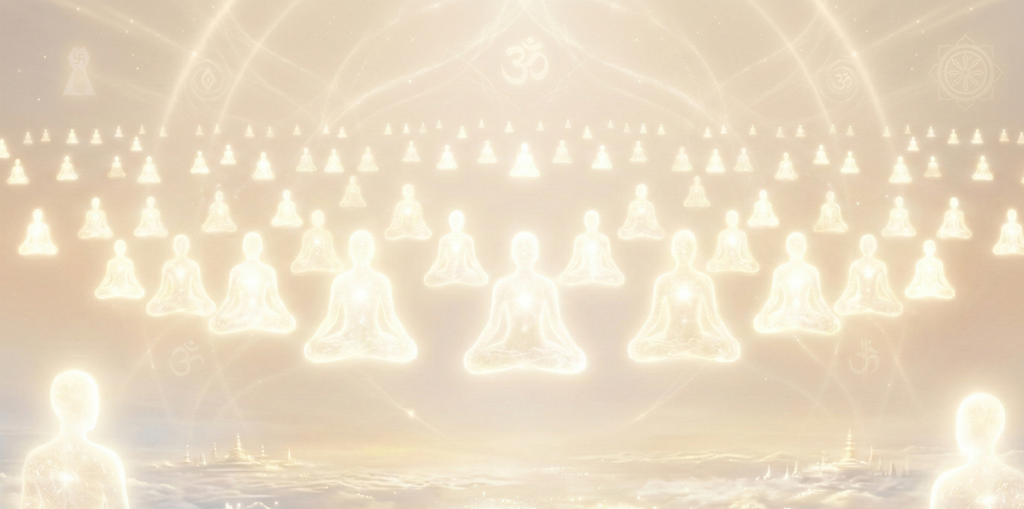
According to Jain, liberated souls are called Siddhas. Once liberated, the soul rises to Siddhashila, the top of the universe, where it exists eternally in a state of infinite knowledge, infinite perception, infinite bliss, and infinite energy.
Jaina sees this as the final state of the soul’s journey. In a way, we can say that it is the start of the total freedom but it is not starting a new phase of activity or existence in the worldly sense. It is not a new journey, but the final and permanent state of the soul in its pure form.
Buddhism
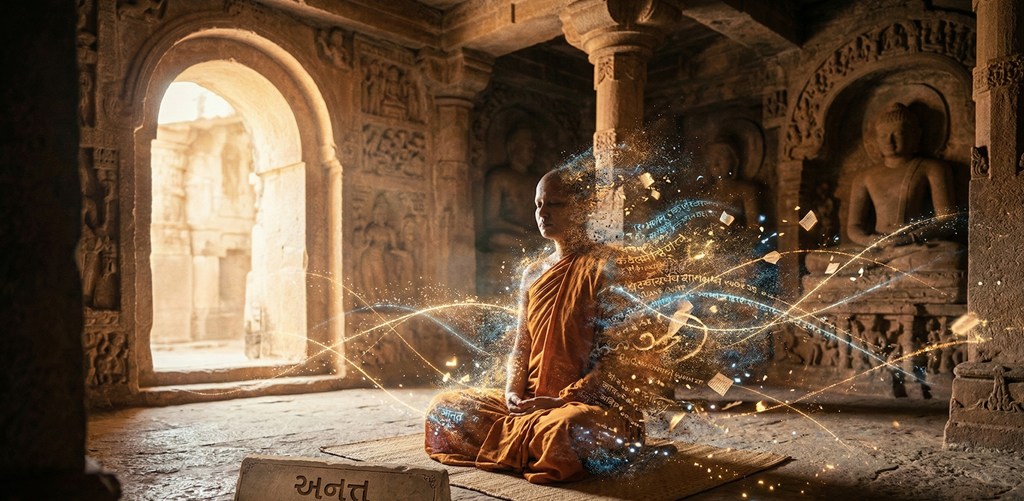
Buddhism believes in the anatta (non-self). So, there is no one there to experience the new beginning. Nirvana is not the start of a separate, self-existing condition. Instead, it is the cessation of craving, ignorance, and the processes that produce suffering and rebirth.
We can’t say it is the independent state, because there is no one to experience this independence.
In Buddhism, rather than a “new independent state,” Nirvana is understood as:
- The end of dependence on craving and ignorance
- The end of conditioned existence
- The realization of the unconditioned (asankhata)
Nyaya and Vaisheshika
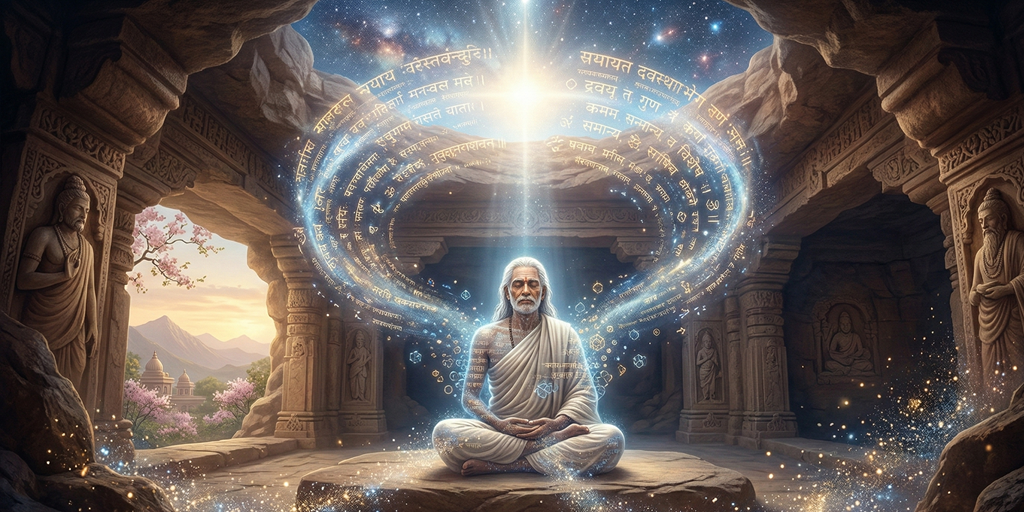
In Nyaya and Vaisheshika, liberation is called Apavarga, as the complete cessation of suffering. Ater achieving liberation, Atman continues to exist eternally. It remains in a pure, inactive state without any pain, pleasure, mental activity and cognition.
We can say that it is not the start of new experience, but start as being in a permanent state of total freedom from suffering.
Samkhya and Yoga
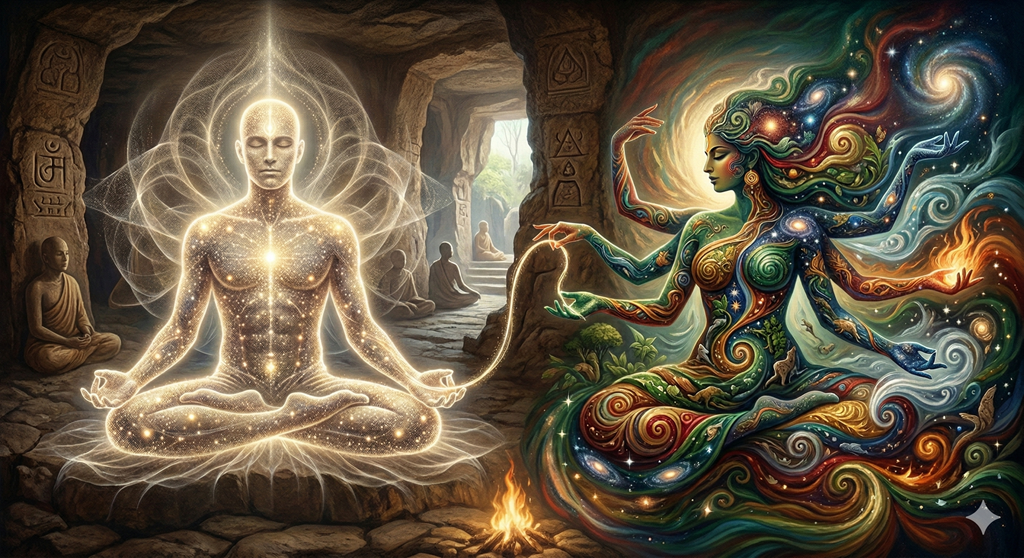
Samkhya and yoga believe in the two eternal elements purusha and prakriti. The whole world come to an exitance because purusha identified himself as the prakriti and doer of all changes.
In the state of Kaivalya(means isolation or aloneness) purusha identifies his true nature that he is different from prakriti and remains in its pure nature as eternal, inactive, witnessing consciousness.
Again, it is not a start of new activity, but eternal existence of pure awareness.
Mimamsa
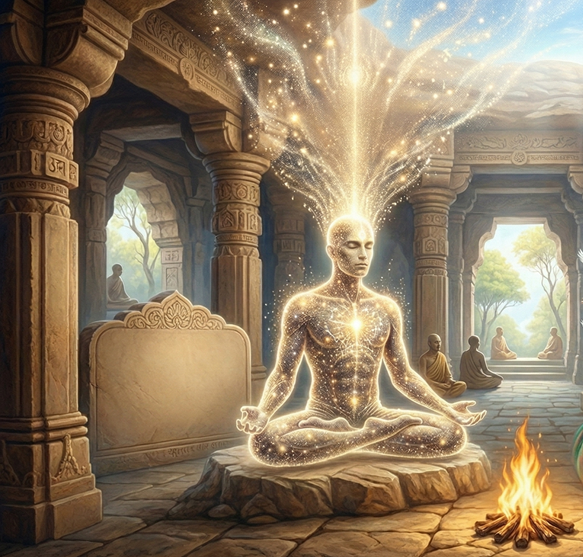
Mimamsa is the path of Karma and Vedic rituals. Liberation is the mainly the cessation of suffering. It is again not a start of new activity or cycle but atman being in natural, unembodied state, free from karma and worldly experience.
This view is slightly different from Nyaya. In Nyaya Liberation is the absolute cessation of all suffering and all mental states. The liberated self has no cognition at all — no awareness, pleasure, or pain. It is a completely inactive, contentless existence.
In Mīmāṁsā, liberation is also freedom from suffering, but some later Mīmāṁsakas maintain that the self retains its intrinsic nature, and cognition is not denied as strictly as in Nyāya. The emphasis is less on the total absence of all qualities and more on the complete freedom from pain and bondage.entirely denied in the same strict way as Nyāya. The emphasis is less on “total absence of qualities” and more on freedom from pain.
Vedanta
Advaita
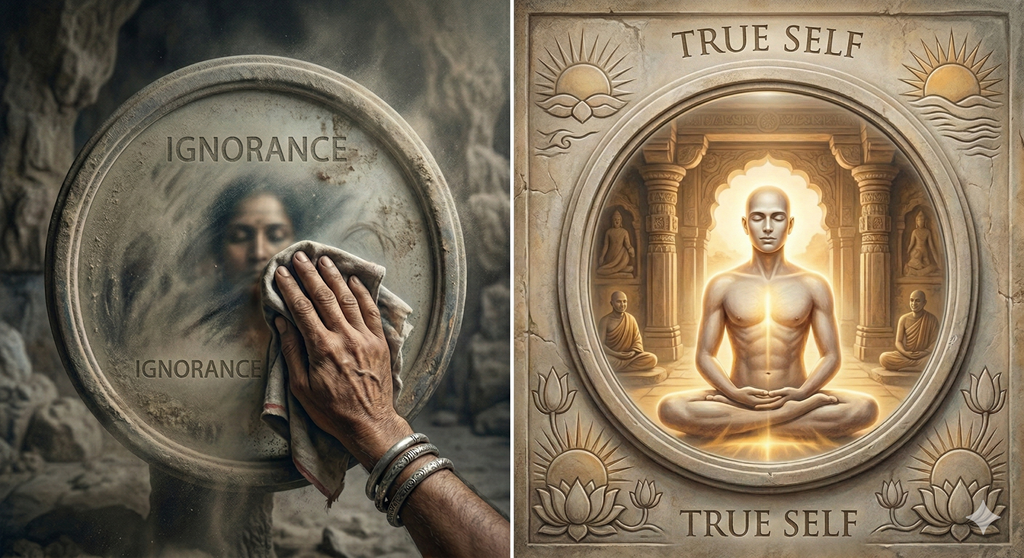
Liberation is the realization of one’s true nature as Brahman. Advaita teaches that you have always been Brahman, but due to ignorance (avidyā), you fail to recognize your true self. Because of this ignorance, you identify with the body and mind and experience bondage and suffering.
Therefore, liberation is not the beginning of becoming Brahman; rather, it is the removal of ignorance. It is like removing dust from a mirror — when the dust (ignorance) is cleared away, your true nature is revealed as it has always been.
Visistadavita
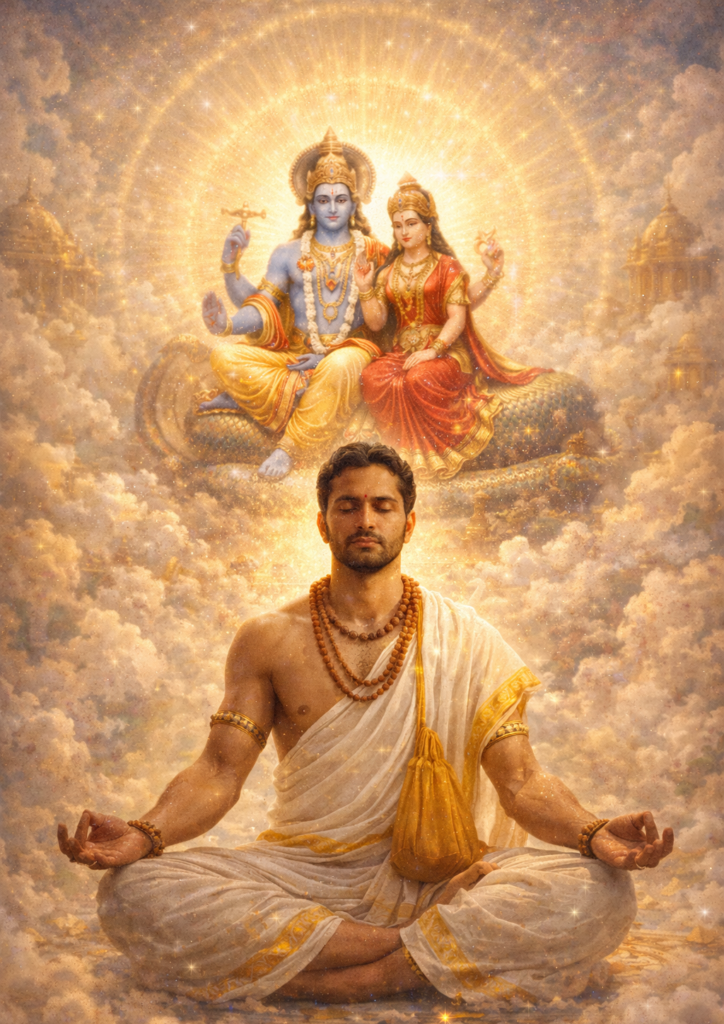
According to Visistadavita souls are distinct yet inseparable from Vishnu (Paramatma). This is Bhakti school of Vedanta and pays the highest importance to the devotion than knowledge. The aim of the devotee is to love the God selflessly.
Liberation is the last stage of this divine love, where you really get to close with your loved one Vishnu in his abode Vaikuntha. It is like the ending all the worldly sufferings and starting the new eternal life of conscious bliss and devotion in the presence of God.
Davita
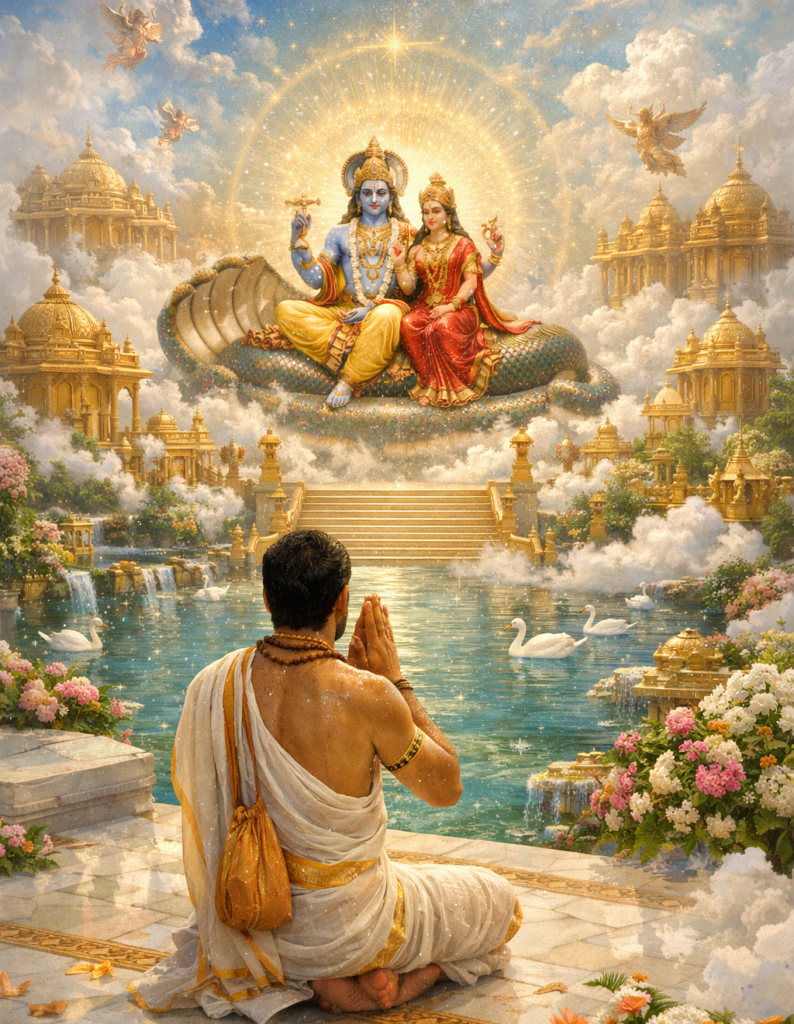
Davita is also the Bhakti school of Vedanta. Here the soul ( Atman) and Paramtamn (Vishnu) eternally different. The goal of the devotee is to love the God selflessly and with complete surrender. When you reach the highest form of love, liberation (moksha) is achieved, which involves the direct experience of God’s presence.
Liberation is the end of worldly suffering and existence and start as Eternal devotional existence in God’s realm.
Unlike Viśiṣṭādvaita, where the soul is distinct yet inseparable from God, Dvaita maintains that the soul never merges with Paramātman and always remains completely distinct from Vishnu, even in liberation.
In the End…
In this entire journey, Liberation is the mostly the end of worldly existence and suffering.
Different philosophical systems use different terms and describe the state in different ways, but the ultimate culmination is the same — freedom from bondage and the cessation of suffering. What is new? It is like the seeing the world from the different perspective, like you watching the movie, you are aware of all the sufferings but not affect by it as you have no realize the truth, that it is the movie.
Similarly, liberation is not the beginning of a new existence, but the permanent establishment in your true nature. Once the truth is realized, you remain firmly rooted in it, free from attachment and bondage.